We Use CookiesWe use cookies to enhance the security, performance, functionality and for analytical and promotional activities. By continuing to browse this site you are agreeing to our privacy policy

10 Best Beginner Piano Keyboard 2026 in the United States
How do we rank products for you?

Our technology thoroughly searches through the online shopping world, reviewing hundreds of sites. We then process and analyze this information, updating in real-time to bring you the latest top-rated products. This way, you always get the best and most current options available.

headphones-stars

Our Top Picks

#1

Winner

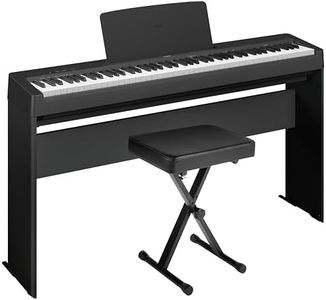
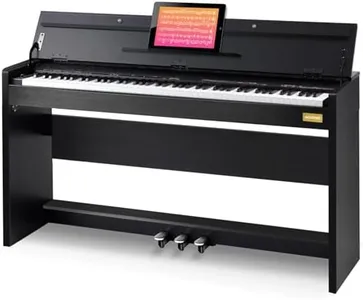
Yamaha Weighted Action 88-Key Digital Piano , Includes Power Adapter and Sustain Foot Switch

Rating
10.0
Chosen by1,371
Key Action
Touch Sensitivity
Built-in Learning Tools

Most important from
2044 reviews

Key Action
The Graded Hammer Action keys respond with nuanced weight and sensitivity, closely mimicking the resistance of an acoustic piano.
Touch Sensitivity
The touch sensitivity offers a wide range of dynamics, providing nearly the same flexibility as a real piano.
Built-in Learning Tools
The piano's metronome and ability to layer different voices or split the keyboard open up creative possibilities.
Connectivity Options
Bluetooth connectivity allows for effortless music playback or integration with learning apps.
Portability
The compact size and sleek design make it ideal for smaller spaces while retaining the elegance of a traditional piano.

The Yamaha P143B is an excellent choice for beginners looking for a digital piano that closely mimics the feel and sound of an acoustic piano. With 88 keys that feature weighted hammer action, it provides a realistic touch, helping new players develop proper finger strength and technique. The sound quality is another strong point, as it offers premium grand piano tones with natural resonance, making practice sessions enjoyable.

Portability is catered for with its slim and lightweight design, which means you can easily move it around your home or take it with you when traveling. The built-in speakers allow for a more immersive experience, while the headphone jack is useful for quiet practice. Additionally, its one-button controls and built-in learning tools simplify the learning process, making it accessible for all skill levels.

There are a few drawbacks to consider. While it includes various sound voices, it may not have as extensive a range of sounds as some more advanced digital pianos. The polyphony is standard but could limit more complex pieces, especially as you progress. Also, the reliance on corded electric power can be a limitation for those wanting to play without being tethered to an outlet.

Rating
10.0
Chosen by1,371
Key Action
Touch Sensitivity
Built-in Learning Tools

Most important from
2044 reviews

Key Action
The Graded Hammer Action keys respond with nuanced weight and sensitivity, closely mimicking the resistance of an acoustic piano.
Touch Sensitivity
The touch sensitivity offers a wide range of dynamics, providing nearly the same flexibility as a real piano.
Built-in Learning Tools
The piano's metronome and ability to layer different voices or split the keyboard open up creative possibilities.
Connectivity Options
Bluetooth connectivity allows for effortless music playback or integration with learning apps.
Portability
The compact size and sleek design make it ideal for smaller spaces while retaining the elegance of a traditional piano.
#2

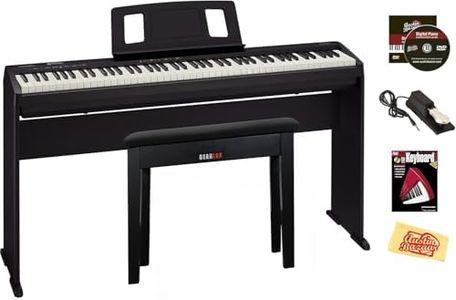
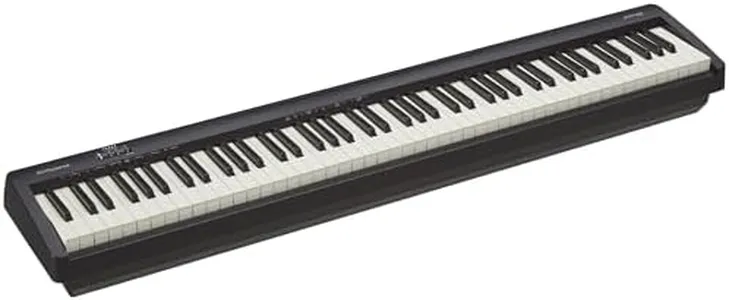
Roland FP-10 Digital Piano - Black Bundle with KSC-FP10 Stand, Bench, Sustain Pedal, Instructional Book, Online Lessons, Instructional DVD, and Austin Bazaar Polishing Cloth

Rating
9.1
Number of Keys
Key Action
Built-in Learning Tools

Most important from
334 reviews

Number of Keys
Despite its portability for a full 88-key piano, it’s best suited for home use rather than frequent travel.
Key Action
The weighted keys provide a satisfying touch, making it ideal for developing proper finger technique.
Built-in Learning Tools
The included accessories and online lessons contribute significantly to a smooth learning journey for beginners.
Connectivity Options
Bluetooth MIDI connectivity is a game changer, enabling seamless integration with learning apps and enhancing practice sessions.

The Roland FP-10 is a solid choice for beginners looking for a full 88-key digital piano that closely mimics the feel of an acoustic piano. Its PHA-4 Standard hammer-action keys give a realistic touch and allow for expressive playing, which is great for developing proper finger technique. The piano uses Roland’s SuperNATURAL sound engine, providing rich and responsive piano tones that feel authentic. The FP-10’s standout feature is its Bluetooth MIDI and USB connectivity, making it easy to link with learning apps or music software on tablets and computers—perfect for those who want interactive lessons or to compose digitally.

The bundle adds real value with a sturdy stand, bench, sustain pedal, and helpful learning materials including a piano book, online lessons, and DVDs, which are excellent for self-study. Weighing 27 pounds, it’s fairly portable for a full keyboard but not ultra-light; it fits well in a home setting rather than for frequent travel. While it doesn’t have extensive built-in learning tools like some beginner keyboards with light-up keys or multiple lesson modes, the included access to online lessons through Roland’s partnership with Pianote fills this gap nicely. The headphone jack allows quiet practice, another plus for beginners.

If you want a beginner-friendly piano that feels close to the real thing, offers good sound quality, and supports modern connectivity for learning, the Roland FP-10 bundle is a well-rounded option. However, if you prefer more built-in teaching features or something lighter to carry around, you might want to explore other models.

Rating
9.1
Number of Keys
Key Action
Built-in Learning Tools

Most important from
334 reviews

Number of Keys
Despite its portability for a full 88-key piano, it’s best suited for home use rather than frequent travel.
Key Action
The weighted keys provide a satisfying touch, making it ideal for developing proper finger technique.
Built-in Learning Tools
The included accessories and online lessons contribute significantly to a smooth learning journey for beginners.
Connectivity Options
Bluetooth MIDI connectivity is a game changer, enabling seamless integration with learning apps and enhancing practice sessions.
#3

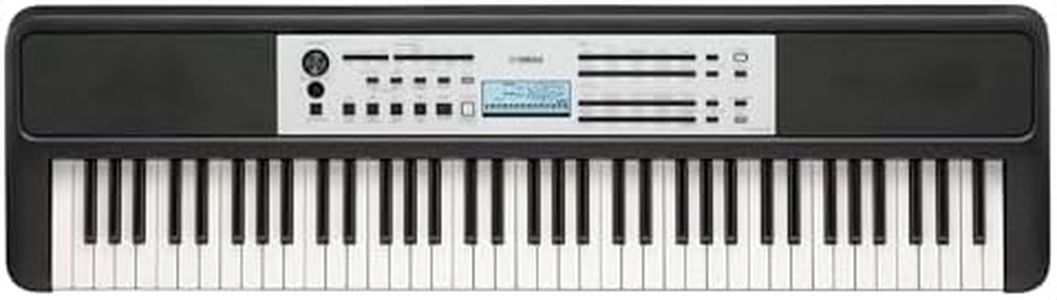
Yamaha PSR-EW320 76 Touch Sensitive Key Portable Keyboard for Beginners with Music Rest, Power Adapter

Rating
8.5
Number of Keys
Key Action
Portability

Most important from
703 reviews

Number of Keys
The 76 keys offer a great balance of range and portability, making it easy to transport and play anywhere, even on battery power outdoors.
Key Action
The key action feels responsive and satisfying, supporting good technique development for beginners.
Portability
Compact and lightweight design allows playing comfortably in small spaces without needing a stand.

The Yamaha PSR-EW320 is a solid choice for beginner piano players who want a versatile keyboard that's both accessible and portable. With 76 full-size keys, it offers a wider range than typical 61-key models, which gives learners more room to explore and play a broader variety of music. The touch-sensitive keys respond to how hard you press them, allowing you to express dynamics in your playing—this is a big plus for developing proper technique early on. Yamaha's built-in learning tools, like the Keys to Success system and Touch Tutor, are especially helpful for beginners. They break songs into manageable parts and teach how to control volume with finger pressure, making practice less intimidating. The Smart Chord feature is a nice touch, letting users easily play chords that sound good even if they’re still learning finger positions.

It has a clear digital display and multiple instrument voices and rhythms to keep practice interesting. Connectivity includes a headphone jack for quiet practice and power options that can be both corded or battery-powered, adding some flexibility for using it in different places. Weighing around 11 pounds and sized to fit comfortably on a desk or stand, it’s fairly portable, though not ultra-light. The keyboard lacks USB or MIDI connectivity, which could be a downside if you want to connect to a computer or apps for expanded learning later.

This keyboard suits teens or adults starting out who want a responsive instrument with helpful built-in lessons and decent portability, but those looking for advanced features or extensive connectivity might find it somewhat basic.

Rating
8.5
Number of Keys
Key Action
Portability

Most important from
703 reviews

Number of Keys
The 76 keys offer a great balance of range and portability, making it easy to transport and play anywhere, even on battery power outdoors.
Key Action
The key action feels responsive and satisfying, supporting good technique development for beginners.
Portability
Compact and lightweight design allows playing comfortably in small spaces without needing a stand.

Buying Guide for the Best Beginner Piano Keyboard

Choosing the right beginner piano keyboard can be a fun and rewarding experience. The right keyboard will help you learn and enjoy playing music, so it's important to consider a few key specifications to ensure you get the best fit for your needs. Here are some important factors to consider when selecting a beginner piano keyboard.
Number of KeysThe number of keys on a keyboard can range from 25 to 88. For beginners, a keyboard with 61 keys is often recommended as it provides a good range for learning most songs without being too overwhelming. If you plan to advance to more complex pieces, an 88-key keyboard, which is the standard for acoustic pianos, might be a better long-term investment. However, if portability is a priority, a smaller keyboard with 49 keys might be more suitable.
Key ActionKey action refers to how the keys respond when pressed. There are three main types: non-weighted, semi-weighted, and fully weighted (hammer action). Non-weighted keys are lighter and easier to press, making them suitable for young children or absolute beginners. Semi-weighted keys offer a bit more resistance, providing a more piano-like feel. Fully weighted keys mimic the feel of an acoustic piano and are ideal for those who want to develop proper finger strength and technique. Consider your long-term goals and physical comfort when choosing the key action.
Touch SensitivityTouch sensitivity means the keyboard responds to the force with which you press the keys, producing louder or softer sounds accordingly. This feature is important for developing expressive playing skills. Keyboards with adjustable touch sensitivity allow you to customize the response to suit your playing style. For beginners, having touch sensitivity can help in learning dynamics and expression, making it a valuable feature to look for.
PolyphonyPolyphony refers to the number of notes a keyboard can produce at the same time. A higher polyphony count allows for more complex and sustained sounds. For beginners, a polyphony of 32 to 64 notes is usually sufficient. However, if you plan to play more intricate pieces or use the sustain pedal frequently, a higher polyphony count (128 or more) will ensure that notes do not cut off unexpectedly.
Built-in Learning ToolsMany beginner keyboards come with built-in learning tools such as lesson modes, light-up keys, and metronomes. These features can be incredibly helpful for self-teaching and keeping practice sessions engaging. Look for keyboards that offer step-by-step lessons, song libraries, and interactive features to support your learning journey. These tools can make the learning process more enjoyable and effective.
Connectivity OptionsConnectivity options like USB, MIDI, and headphone jacks can enhance your learning experience. USB and MIDI connections allow you to connect the keyboard to a computer or tablet for use with music software and online lessons. Headphone jacks are essential for practicing quietly without disturbing others. Consider what additional equipment you might use and choose a keyboard with the appropriate connectivity options to support your needs.
PortabilityPortability is an important factor if you plan to move your keyboard frequently or have limited space. Lightweight and compact keyboards are easier to transport and store. However, more portable models might compromise on features like key action and polyphony. Balance your need for portability with the essential features you require to ensure you get a keyboard that fits your lifestyle and learning goals.

FAQ